
Black Coffee (Hercule Poirot #7)
Title: Black Coffee (Hercule Poirot #7)
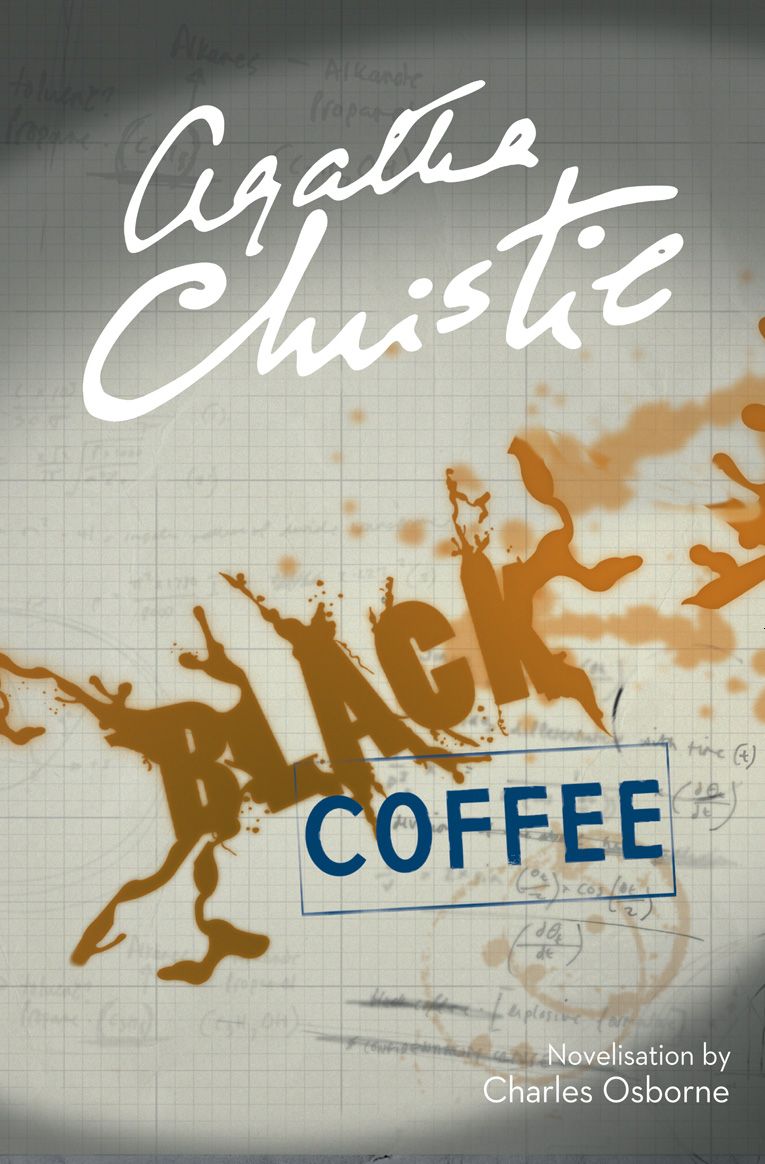
Author: Agatha Christie
Published in: 1930
Date read: 27th March 2026
Score: 4/5
Genre: Crime, Mystery, Classic
Plot: (Warning, may contain spoilers):
Black Coffee by Agatha Christie (Novelisation by Charles Osborne)
Originally written as a stage play in 1930, Black Coffee was later adapted into a novel by Charles Osborne in 1998. It remains a fan favourite for being the only play Christie wrote specifically for Hercule Poirot, featuring the classic "country house" setting that defined the Golden Age of detective fiction.
The Plot:
The story begins when the eminent physicist Sir Claud Amory contacts Hercule Poirot, fearing that a member of his own household is plotting to steal a top-secret formula for a powerful new explosive. Sir Claud invites Poirot and Captain Hastings to his estate, Abbott’s Cleve, to investigate.
Upon their arrival, the situation takes a dramatic turn. During a tense after-dinner gathering, Sir Claud locks the library doors and turns off the lights, offering the thief a chance to return the stolen formula anonymously in the dark. However, when the lights come back on, the formula is still missing, and Sir Claud is found dead in his chair—poisoned by a lethal dose in his coffee.
The Mystery:
Poirot is faced with a room full of suspects, all of whom had the opportunity and a potential motive to kill the scientist:
• Richard Amory: Sir Claud’s son, who is heavily in debt.
• Lucia Amory: Richard’s beautiful wife, who hides a mysterious past and appears terrified of a stranger visiting the house.
• Barbara Amory: Sir Claud's high-spirited niece, who enjoys the drama a bit too much.
• Dr. Carelli: An uninvited Italian guest with a suspicious interest in the family's affairs.
• Edward Raynor: Sir Claud’s efficient but enigmatic secretary.
The Investigation:
Trapped in the house by a storm of secrets rather than weather, Poirot must use his "little grey cells" to navigate a web of blackmail, hidden identities, and international espionage. The case hinges on a series of subtle clues: a misplaced box of chocolates, a missing key, and the exact timing of when the sugar was added to the coffee.
In a race against time, Poirot must identify the killer before they can escape with the formula—or strike again to protect their secret.
Comments:
Another good story, not as good as some others but perfectly entertaining. I can see how it would work better as a play with it being set mainly in a single location. I would like to have seen a stage performance of it.
Books that we've read by Agatha Christie (19):
The Mysterious Affair at Styles (Hercule Poirot, #1) (1920), The Secret Adversary (Tommy and Tuppence Mysteries, #1) (1922), The Murder on the Links (Hercule Poirot #2) (1923), The Man in the Brown Suit (Colonel Race, #1) (1924), Poirot Investigates (1924), The Secret of Chimneys (1925), The Murder of Roger Ackroyd (Hercule Poirot, #4) (1926), The Big Four (Poirot #5) (1927), The Mystery of the Blue Train (Poirot #6) (1928), The Murder at the Vicarage (Miss Marple #1) (1930), Black Coffee (Hercule Poirot #7) (1930), The Thirteen Problems (Miss Marple, #1) (1932), The Peril at End House (Hercule Poirot #8) (1932), Murder on the Orient Express (1934), The ABC Murders (Hercule Poirot #13) (1936), And Then There Were None (1939), The Labours of Hercules (Hercule Poirot #26) (1947), Crooked House (1949), A Caribbean Mystery (1964)
This page was updated on: 22nd March 2026